Western Capercaillie

Caroll Alvarado
| 04-02-2026
 · Animal Team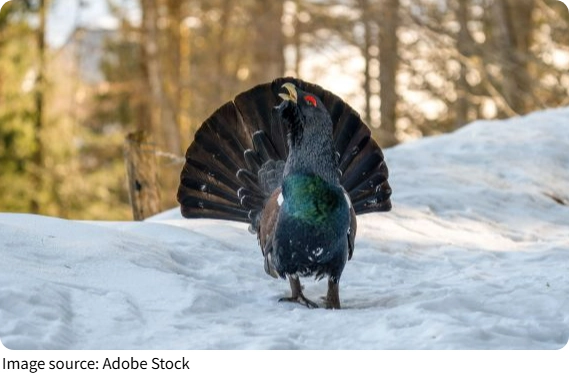
When you think of the dense, foggy forests of Europe, what comes to mind? For many, it's the Western Capercaillie, a bird that epitomizes the wild spirit of these untamed woods.
This stunning grouse, also known as Tetrao urogallus, boasts an impressive presence, making it a symbol of the natural world's beauty and mystery.
But beyond its size and striking plumage, there's a story of survival, ritual, and the deep connection between species and their habitats.
Meet the Western Capercaillie
The Western Capercaillie, often described as the "king of the forest," is a bird with some serious flair. Native to Europe and parts of Asia, this large grouse can grow up to 1 meter (3.3 feet) in length and weigh as much as 5 kilograms (11 pounds). Its impressive size is only the beginning—its display during mating season is nothing short of spectacular.
Key Features:
- Males sport striking plumage, with dark feathers accented by iridescent greens, blues, and purples.
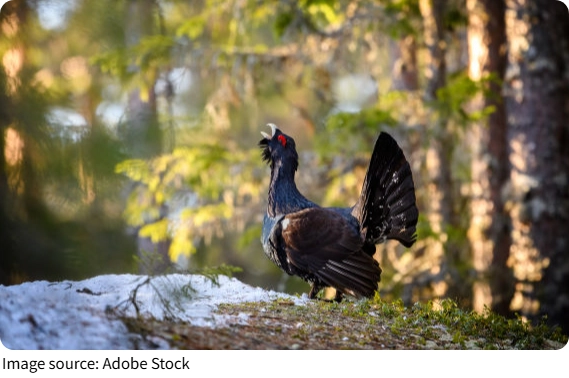
- They have a unique comb over their eyes, which turns bright red during mating displays.
- Females are more modest in appearance, with brown and grey feathers that help them blend into the forest floor.
This bird is adapted to life in the deep woodlands, where it uses its large wings to glide silently through the trees. Despite its bulk, the Capercaillie is an expert at camouflage, blending seamlessly with its surroundings.
The Mating Dance: A Spectacle of Nature
One of the most mesmerizing sights in the wild is the male Capercaillie's mating ritual. In spring, the males perform an elaborate display to attract females, puffing out their chests, spreading their tails, and emitting a series of booming calls that echo through the forest. These calls can be heard from a great distance, signaling the bird's presence and prowess.
Steps to the Display:
- The male first finds a suitable clearing in the forest.
- He inflates his chest and spreads his tail feathers wide, resembling a fan.
- He then produces a series of deep, resonant calls that serve as both a challenge to rival males and an invitation to females.
The dance is a test of strength, stamina, and beauty. The females watch from a distance, often choosing mates based on the intensity and frequency of the male's calls.
Habitat: A Forest King's Domain
The Capercaillie thrives in dense, coniferous forests, often at higher elevations. These habitats provide not only food sources—such as berries, seeds, and insects—but also protection from predators. The thick cover of trees allows the birds to stay hidden while they forage or roost, often high in the branches.
Ideal Environment:
- A mix of mature forests with plenty of pine, spruce, or fir trees.
- Areas with low human disturbance, which is becoming rarer in modern times.
- Sufficient ground vegetation to provide food and cover for the young chicks.
These forests also play a crucial role in the bird's life cycle, providing nesting sites and protection during the breeding season. The Capercaillie relies on this habitat for survival, and its presence is a good indicator of forest health.
Conservation Challenges
Despite its imposing presence, the Western Capercaillie faces significant challenges in the modern world. Habitat loss due to logging, fragmentation of forest landscapes, and human development have drastically reduced the bird's range. Additionally, the bird's elusive nature and its reliance on specific forest environments make it vulnerable to environmental changes.
Conservation Efforts:
- Habitat restoration projects have been initiated in several countries to replant forests and create wildlife corridors.
- Monitoring programs track the population and health of Capercaillie populations, helping to inform conservation policies.
- Limiting hunting and human disturbance in key areas has shown promise in helping populations recover.
By addressing these threats, conservationists hope to ensure that the Capercaillie continues to thrive in Europe's forests, keeping the tradition of its magnificent display alive for future generations.
The Future of the Capercaillie
The Western Capercaillie is a bird that tells the story of the natural world in all its complexity—its beauty, its challenges, and its resilience. By supporting conservation efforts, protecting natural habitats, and raising awareness about the bird's importance, we can help secure a future where the sound of the Capercaillie's calls continues to echo through the forests.
As we reflect on this majestic creature, it's a reminder that even the largest and most powerful among us are vulnerable to the forces of change. The Capercaillie's survival depends on our commitment to preserving the environments that sustain it, ensuring that this incredible bird doesn't become a distant memory of a once-wild world.